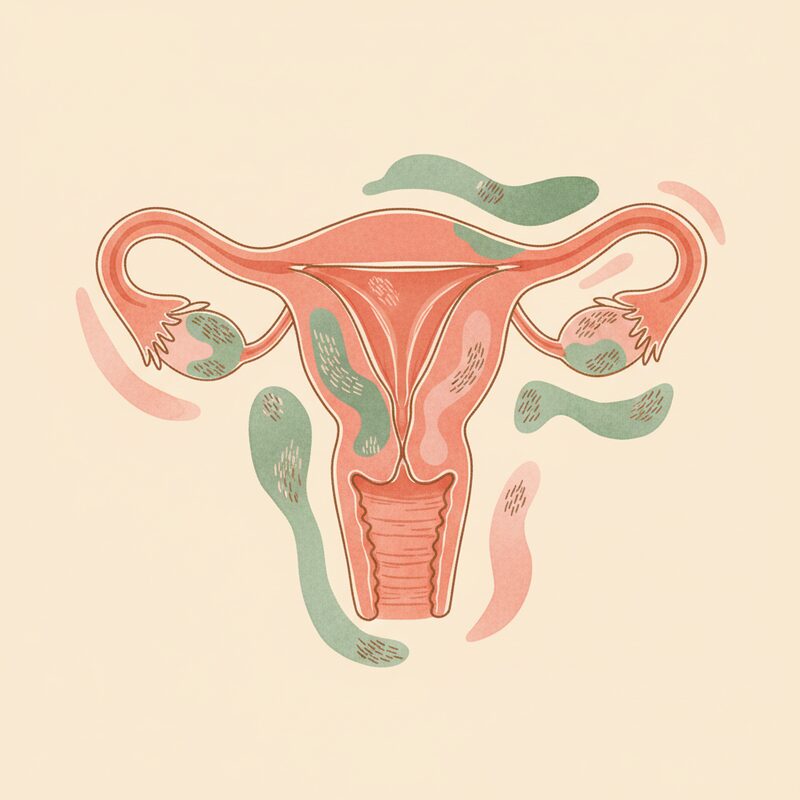
What is ERA?
ERA (endometrial receptivity analysis) is a genetic test that examines the expression of about 240 genes in the endometrial lining to determine whether the lining is in the right state to accept an embryo at a specific point in the cycle. It identifies whether your personal "window of implantation" is at the standard timing, earlier, or later.
The idea: most embryo transfers are scheduled assuming every woman's window is at the same standard time after progesterone exposure. ERA challenges that assumption by testing it directly. If your window is displaced — even by 12 or 24 hours — transferring on the standard day means transferring outside your receptive window, and the embryo may fail to implant despite being healthy.
The science
The endometrial lining cycles through three states each month:
- Pre-receptive — not yet ready.
- Receptive — the implantation window is open.
- Post-receptive — the window has closed.
ERA measures gene expression in a biopsy and assigns the lining to one of these three categories at the time of the biopsy. The result is then used to time transfer correctly in subsequent cycles.
Who benefits?
- Recurrent implantation failure — 2 or more failed transfers of good-quality embryos in a properly prepared uterus.
- Patients who've already had a normal embryo (PGT-A tested) fail to implant.
- Women with otherwise unexplained transfer failure where uterine, embryo, and immune factors have been ruled out.
For first IVF cycles, ERA is not indicated — most transfers succeed without it.
How ERA works — step by step
- Mock cycle preparation — the endometrium is prepared with oestrogen and progesterone exactly as it would be for a frozen embryo transfer cycle.
- Endometrial biopsy — performed on what would have been the embryo-transfer day. A thin catheter is passed into the uterine cavity and a small tissue sample is taken. Procedure takes a few minutes.
- Gene expression analysis — the biopsy is shipped to a specialised genetics lab. Results take 2–3 weeks.
- Personalised transfer timing (pET) — in a subsequent cycle, transfer is scheduled at the optimised time based on the ERA result.
What the evidence shows
The data on ERA are genuinely mixed in 2026.
- Earlier observational studies and a landmark trial reported substantial improvement in live-birth rates in women with recurrent implantation failure when transfers were timed using ERA.
- More recent randomised controlled trials have been less impressive, with some showing no clear benefit even in recurrent failure populations.
- For first-time IVF patients, ERA does not improve outcomes.
The honest position: ERA is reasonable to consider in refractory implantation failure when other causes have been worked up. It is not a routine first-line test.
Cost in Hyderabad
An ERA test costs ₹40,000–₹70,000 in Hyderabad in 2026, including the mock cycle preparation, the biopsy itself, and the gene-expression analysis fee.
Limitations
- Doesn't address other causes of implantation failure (uterine factors, immune, embryo quality).
- Mock cycle delays the next transfer by at least one cycle.
- Evidence for benefit in many subgroups is uncertain.
How I work
I offer ERA selectively, after a thorough discussion of what the test can and can't tell us. For most patients, the more useful conversation is about the full workup of implantation failure — uterine cavity (hysteroscopy), embryo quality, sperm DNA fragmentation, immune and clotting factors — rather than jumping to ERA alone.
Had multiple failed transfers?
Let's do the full implantation-failure workup before deciding whether ERA fits your picture.
Frequently asked questions
The questions patients ask me most often about ERA.
When is ERA indicated?
Most useful in recurrent implantation failure: 2+ failed transfers of good embryos in a properly prepared uterus. Not indicated for a first IVF cycle.
Does ERA improve outcomes?
Mixed evidence. Original studies showed 25–30% of recurrent failure patients had a displaced window. Recent randomised trials less impressive. Reasonable for refractory cases, not routine.
Is the ERA biopsy painful?
Mildly uncomfortable, similar to IUD insertion. Cramping for a few minutes. No anaesthesia needed for most patients.
Can ERA be done in a frozen cycle?
Yes — performed in a mock cycle that mimics frozen-transfer hormonal prep. Biopsy taken on what would have been the transfer day. Result guides future cycle timing.
How much does ERA cost in Hyderabad?
₹40,000–₹70,000 in 2026, including mock cycle, biopsy, and lab analysis.
What does pre-receptive or post-receptive mean?
Pre-receptive: lining wasn't ready, transfer should be delayed 12–24 hours. Post-receptive: window already passed, transfer should be earlier. Receptive: standard timing was correct.
Do I need to repeat ERA?
Usually no. The window is generally stable across cycles for a given woman. One ERA result guides future transfers.
Does ERA help with implantation failure of unknown cause?
Sometimes. It addresses displaced window only. Doesn't address uterine factors, immune issues, or embryo quality. Needs a comprehensive workup alongside.