What is PCOS?
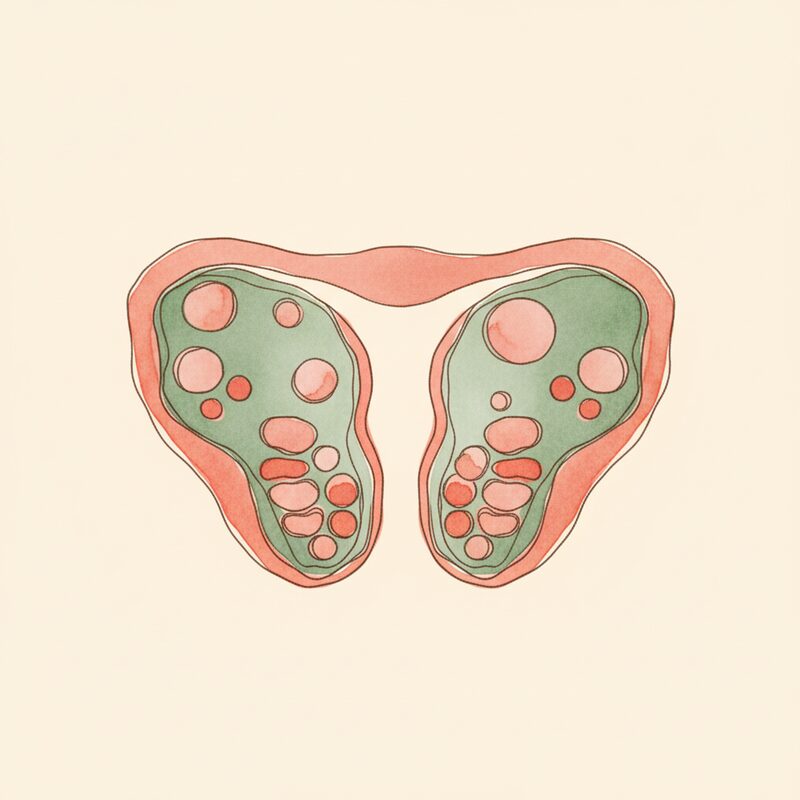
Polycystic ovary syndrome is a heterogeneous endocrine condition where the ovaries don't ovulate reliably, often produce too much androgen (the "male-pattern" hormones), and develop a characteristic appearance on ultrasound (many small follicles arranged at the periphery). Underlying drivers usually include insulin resistance and altered LH/FSH signalling.
PCOS is the single most common cause of female infertility worldwide. It's also one of the most under-diagnosed and one of the most treatable.
How PCOS is diagnosed
Using the international Rotterdam criteria, PCOS is present when 2 of these 3 are met:
- Oligo-ovulation or anovulation — irregular or absent periods.
- Clinical or biochemical hyperandrogenism — hirsutism, acne, male-pattern hair loss; or elevated free testosterone / DHEAS on blood tests.
- Polycystic ovaries on ultrasound — 20 or more follicles per ovary, or ovarian volume above 10 mL.
Other conditions that mimic PCOS must be excluded first — thyroid disorders, hyperprolactinaemia, congenital adrenal hyperplasia, and androgen-secreting tumours. A standard workup includes thyroid, prolactin, 17-hydroxyprogesterone, and fasting glucose/insulin.
The four PCOS phenotypes
Not every woman with PCOS looks the same. The Rotterdam criteria create four phenotypes:
- A: Hyperandrogenism + anovulation + polycystic ovaries (classic, most severe).
- B: Hyperandrogenism + anovulation (no PCO on US).
- C: Hyperandrogenism + polycystic ovaries (ovulates).
- D: Anovulation + polycystic ovaries (no hyperandrogenism).
Knowing the phenotype matters because management strategies differ.
How PCOS affects fertility
The primary fertility issue in PCOS is anovulation — eggs aren't released regularly. The ovary contains plenty of eggs (often more than average for age), but they get stuck in early development. There may also be modestly increased miscarriage risk, especially when PCOS is poorly controlled. Egg quality is generally preserved in younger women with PCOS.
The treatment ladder for PCOS fertility
1. Lifestyle — first-line for most
In women who are overweight, a 5–10% reduction in body weight restores ovulation in many cases without any medication. A lower-glycemic diet, regular physical activity (150 minutes/week of moderate intensity), and improved sleep all help. This is genuinely the first intervention for most patients, especially those not on a tight timeline.
2. Letrozole + timed intercourse
For women who don't ovulate spontaneously despite lifestyle changes, letrozole is the first-line ovulation-induction medication. Cumulative live-birth rate over 5–6 cycles: 60–70%.
3. Add metformin
For women with documented insulin resistance or who didn't respond to letrozole alone, adding metformin can improve response. Not every woman with PCOS needs metformin — this is selective, not default.
4. IUI + ovulation induction
If letrozole + timed intercourse hasn't worked in 3–4 cycles, or if there's any male factor concern, adding IUI improves per-cycle success.
5. IVF
For PCOS that hasn't responded to the above, or where coexisting issues (severe male factor, blocked tubes, advanced age) make stepwise approaches less efficient.
Beyond fertility — the longer story of PCOS
PCOS isn't just a fertility condition. It carries lifelong implications that matter even after a successful pregnancy:
- Metabolic: increased risk of type 2 diabetes, gestational diabetes, metabolic syndrome.
- Cardiovascular: increased lifetime risk of hypertension, dyslipidemia, cardiovascular events.
- Endometrial: unopposed oestrogen from anovulation increases endometrial hyperplasia risk — managed with regular cycle regulation.
- Mental health: higher rates of anxiety, depression, and disordered eating.
Whether or not you're trying to conceive, PCOS deserves ongoing management.
How I work with PCOS
The biggest mistake I see in PCOS care is jumping to IVF when ovulation induction would have worked. Letrozole is cheap, well-tolerated, and effective in 60–70% of women with PCOS. I plan 5–6 cycles of stepwise care, monitor each, and step up only when stepwise approaches have genuinely been tried. We also handle the metabolic side — not just the fertility piece — from day one.
Trying to conceive with PCOS?
A consultation maps out a stepwise plan that fits your phenotype and timeline.
Frequently asked questions
The questions patients ask me most often about PCOS and fertility.
How do I know if I have PCOS?
Rotterdam criteria: 2 of 3 — irregular/absent ovulation, signs of high androgens (clinical or biochemical), polycystic ovaries on ultrasound. Other mimicking conditions (thyroid, prolactin, adrenal) must be ruled out. Clinical evaluation + blood tests + ultrasound usually confirms.
Will PCOS make it harder to conceive?
Yes — PCOS is the most common cause of anovulatory infertility. But it's also one of the most treatable. Most women with PCOS conceive with stepwise care without ever needing IVF.
Will I need IVF?
Usually not. 60–70% conceive within 5–6 cycles of letrozole-based ovulation induction. IVF is the next step only when OI has failed or there's a coexisting issue.
Does PCOS affect egg quality?
Nuanced data. PCOS produces more eggs per cycle; quality is generally similar to women without PCOS in IVF. Anovulation is the issue, not quality.
Is there a cure?
PCOS is chronic, not curable, but very manageable. Symptoms can be substantially reduced. Long periods with minimal symptoms when underlying drivers are managed well.
Can lifestyle alone restore ovulation?
Often yes in women with PCOS who are overweight. 5–10% weight loss restores ovulation in many cases without medication. Lower-glycemic diet, exercise, sleep all help.
Should I take metformin?
Useful with documented insulin resistance, prediabetes, or in some ovulation-induction protocols. Not universally indicated. Decision based on metabolic profile and current goals.
Will my children inherit PCOS?
PCOS has familial component — daughters of women with PCOS have 2–4x increased risk. Multiple genes plus lifestyle. Early awareness helps daughters recognise symptoms early.