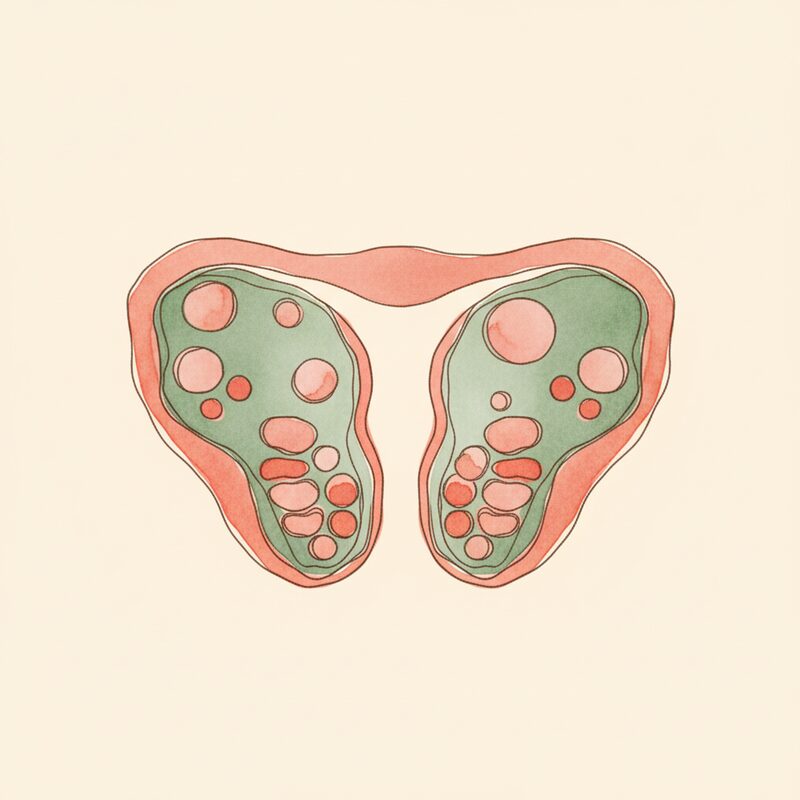
What is ovulation induction?
Ovulation induction is the use of medication to develop and release a mature egg from the ovary in a cycle where ovulation isn't happening reliably on its own — or to produce two to three eggs in a controlled way to improve the per-cycle chance of conception.
It's the gentlest fertility intervention available. For many couples, especially those whose underlying issue is irregular or absent ovulation (a common picture in PCOS), it's also the only intervention they ever need.
Who is ovulation induction for?
- PCOS (polycystic ovary syndrome) — the most common indication, where ovulation is irregular or absent.
- Anovulation — women who don't ovulate due to other causes (hypothalamic dysfunction, thyroid issues once corrected, hyperprolactinemia).
- Irregular cycles with infrequent ovulation.
- Unexplained infertility — as a first-line attempt before moving to IUI or IVF.
- Combined with IUI — in mild male factor or unexplained infertility.
The medications
Letrozole (Femara)
An aromatase inhibitor. Now the first-line drug for ovulation induction in PCOS based on multiple large trials. Taken orally for 5 days starting on cycle day 2 or 3. Cleared from the body quickly; doesn't have the persistent anti-oestrogen effects of clomiphene that thin the endometrium.
Clomiphene citrate (Clomid)
An older selective oestrogen-receptor modulator. Still effective and widely used. Can thin the endometrium and cervical mucus in some women, which is one reason letrozole has become first-line in PCOS.
Gonadotropin injections (FSH, hMG)
Direct hormonal stimulation. More powerful, more expensive, higher risk of multiple pregnancy and OHSS. Used when oral medications haven't worked or when a stronger response is needed.
How a cycle works — step by step
- Baseline ultrasound on cycle day 2 or 3 to confirm no ovarian cysts and to assess the antral follicle count.
- Medication — typically letrozole 2.5–5 mg or clomiphene 50–100 mg for 5 days starting cycle day 2 or 3.
- Follicular monitoring — ultrasound around day 10–12 to track follicle growth. Sometimes a second scan a few days later.
- Trigger injection — hCG injection when the lead follicle is 18–22 mm, to time ovulation precisely.
- Timed intercourse or IUI — 24 to 36 hours after the trigger.
- Luteal support — progesterone to support the lining.
- Pregnancy test — 14 days later.
Success rates
Cumulative live-birth rates over 6 ovulation-induction cycles:
- PCOS with letrozole + timed intercourse: 60–70% over 5–6 cycles.
- PCOS with letrozole + IUI: Slightly higher than timed intercourse alone.
- Unexplained infertility under 35: 35–45% cumulatively over 3–4 cycles.
- Over 38: Per-cycle rates drop; we usually move to IVF sooner.
What it costs in Hyderabad
A typical ovulation induction cycle with oral medications, monitoring, and trigger injection costs around ₹5,000–₹10,000 per cycle in 2026. Injectable gonadotropin cycles run higher (₹15,000–₹30,000 including medications). My consultation fee is ₹500.
Risks and considerations
- Multiple pregnancy — 3–5% with letrozole, slightly higher with clomiphene, up to 20% with injectables.
- OHSS — rare with oral medications, possible with injectables. Monitoring catches it early.
- Side effects — hot flashes, mood changes, mild headaches with oral medications; bloating with injectables.
- Repeated cycles without success — we stop and reassess at 6 cycles or sooner if there's no response.
How I work
Ovulation induction is the most under-rated treatment in fertility care. It's cheap, well-tolerated, and works for the right patient. I'll plan up to 6 cycles, monitor each carefully, and re-evaluate at every step. If you're responding and not pregnant, we keep going. If you're not responding or six cycles haven't worked, we step up — usually to IVF, not more of the same.
Is ovulation induction your starting point?
For PCOS and many cases of unexplained infertility, it usually is. Let's evaluate first.
Frequently asked questions
Honest answers to the questions patients ask most often.
Letrozole or Clomid — which is better?
For most women with PCOS, letrozole is now first-line. Large trials show higher live-birth rates with letrozole than clomiphene in PCOS. For women without PCOS, both are comparable. Choice should be individualised.
How long can I stay on ovulation induction?
Most pregnancies happen within the first 3–6 cycles. Beyond 6 ovulatory cycles without pregnancy, marginal benefit drops sharply. At that point we re-evaluate, often adding IUI or moving to IVF.
What's the chance of twins?
With letrozole, around 3–5%. Clomiphene 5–8%. Injectable gonadotropins up to 20% — needs careful monitoring.
Is it painful?
Oral medications cause no pain, only mild side effects. Injectables cause bloating and mild abdominal discomfort. The monitoring ultrasounds are not painful.
Does it work for PCOS?
Yes — ovulation induction with letrozole is first-line for PCOS-related infertility. Cumulative live-birth rate 60–70% over 5–6 cycles. Combined with lifestyle changes, most women with PCOS conceive without ever needing IVF.
Should I add IUI?
Adding IUI improves per-cycle pregnancy rates by 30–50%. Worth considering with any male factor concern, in unexplained infertility, or over 35.
What if I already ovulate?
Even regularly ovulating women with unexplained infertility can benefit from controlled superovulation (2–3 follicles). It's the rationale for OI + IUI in unexplained infertility.
How much does it cost in Hyderabad?
Oral-medication cycle with monitoring: ₹5,000–₹10,000. Injectable cycle: ₹15,000–₹30,000 including medications.