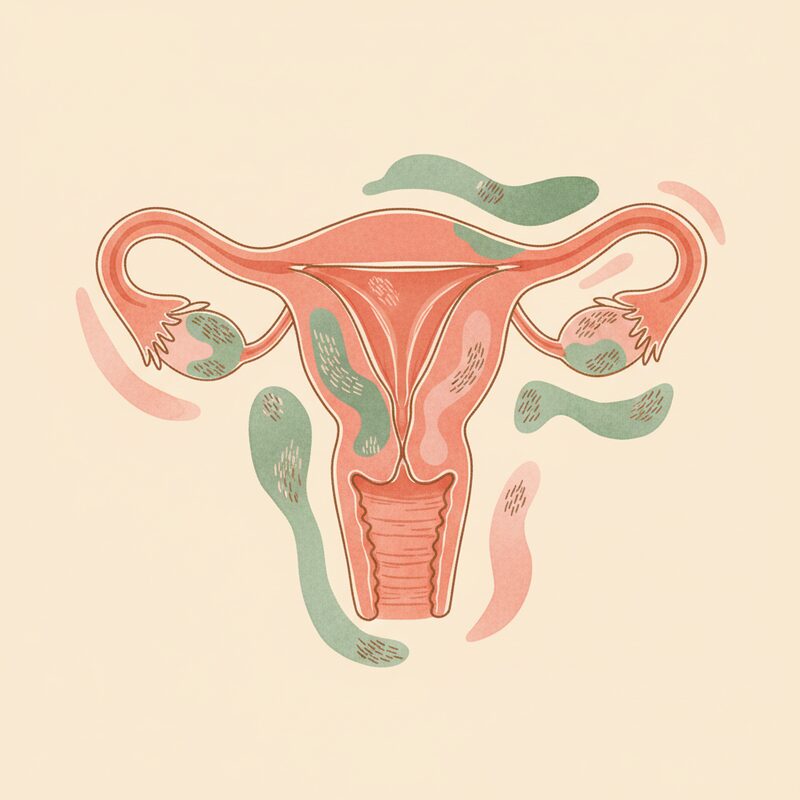
What is endometriosis?
Endometriosis is a condition in which tissue similar to the lining of the uterus (endometrium) grows outside the uterus — on the ovaries, fallopian tubes, peritoneum, bladder, bowel, and elsewhere. These deposits respond to monthly hormonal changes the way endometrium does: they thicken, bleed, and try to shed — but they have nowhere to go. The result is inflammation, scarring, adhesions, and over time, distortion of pelvic anatomy.
The condition is one of the most common causes of female pelvic pain and a major cause of infertility. As personal disclosure: this is something Dr. Chandini has lived with herself, which shapes how the consultation feels in practice.
Symptoms — and why they get dismissed
Endometriosis often presents with:
- Painful periods (dysmenorrhea) that progressively worsen.
- Pain during intercourse (dyspareunia).
- Pelvic pain outside of menstruation.
- Painful bowel movements or urination during periods.
- Heavy or irregular bleeding.
- Infertility as the only presenting symptom in some cases.
- Fatigue — often dismissed but real.
The biggest barrier to early diagnosis is normalising menstrual pain. "Periods are supposed to hurt" is the most common reason endometriosis goes undiagnosed for 6–10 years from first symptoms. They aren't.
How endometriosis is diagnosed
Clinical evaluation
Detailed history and pelvic examination. A skilled examination can detect tender nodules, fixed ovarian masses, and other clues.
Imaging
Transvaginal ultrasound (TVUS) can identify endometriomas and deep infiltrating disease in expert hands. MRI is reserved for complex cases — suspected bowel or bladder involvement, surgical planning.
Laparoscopy
Direct visualisation remains the diagnostic gold standard. With laparoscopy we both confirm the diagnosis and treat at the same time. In many cases imaging is enough and we proceed without diagnostic-only laparoscopy.
Stages of endometriosis
Using the ASRM classification:
- Stage I (minimal): Superficial implants, no adhesions.
- Stage II (mild): More implants, mild adhesions.
- Stage III (moderate): Deeper implants, endometriomas, more substantial adhesions.
- Stage IV (severe): Extensive disease, large endometriomas, dense adhesions distorting pelvic anatomy.
Stage correlates poorly with pain intensity but better with fertility impact.
Effect on fertility
Endometriosis impairs fertility through multiple mechanisms:
- Pelvic adhesions distorting tubes and ovaries (Stage III/IV).
- Endometriomas reducing ovarian reserve and disrupting follicular development.
- Inflammatory environment affecting egg quality and implantation.
- Hormonal disruption affecting cycle quality.
Even mild endometriosis (Stage I/II) reduces fecundity — the per-cycle chance of conception — even without visible mechanical issues.
Treatment for fertility
Mild to moderate endometriosis
Often managed with ovulation induction and IUI, particularly in younger women with normal tubes. Conservative laparoscopic excision can also be helpful and may improve subsequent natural pregnancy rates.
Severe endometriosis
Usually requires laparoscopic excision to address mechanical issues, followed by IVF for actual conception. Large endometriomas (above 4 cm) may need management before IVF.
Recurrent or refractory cases
Pre-IVF GnRH agonist treatment for 3–6 months can improve IVF outcomes in severe endometriosis.
Pain management alongside
Even during fertility treatment, pain management matters. NSAIDs, hormonal suppression (when not actively trying), and lifestyle approaches can all reduce daily impact. We don't treat fertility and pain as separate problems — both belong in the same plan.
How I work with endometriosis
Three principles guide my approach:
- Believe the symptoms. If you say periods hurt, we investigate. We don't normalise it.
- Treat the whole picture, not just fertility. Pain control, hormonal management, and reproductive planning belong together.
- Don't operate to operate. Surgery has its place; so does watchful management. The decision is individualised.
Suspect endometriosis is part of your picture?
A consultation lets us evaluate the disease and plan fertility alongside pain management.
Frequently asked questions
The questions patients ask me most often about endometriosis and fertility.
Can endometriosis be cured?
No permanent cure, but very manageable. Surgical excision can give years of relief; hormonal suppression controls symptoms long-term; pregnancy can temporarily reduce activity. Long-term care often combines approaches.
Will I need surgery?
Not always. Mild endometriosis often managed medically. Surgery is right for severe disease causing pain, endometriomas affecting ovarian function, suspected deep infiltrating disease, or when conservative measures haven't addressed fertility.
Does pregnancy cure endometriosis?
Pregnancy temporarily suppresses activity. Many women experience improvement during pregnancy and breastfeeding. Symptoms often return after periods resume. Not a cure, but a meaningful pause.
Will it come back after surgery?
Recurrence rates after thorough laparoscopic excision are around 20% at 5 years, varying by severity. Hormonal suppression post-op significantly reduces recurrence in women not actively trying to conceive.
Should I go straight to IVF?
Not necessarily. Mild-moderate with normal tubes: OI + IUI often works. Severe disease, large endometriomas, significant tubal involvement: IVF more efficient. Depends on stage, age, ovarian reserve.
Is endometriosis genetic?
Clear familial component. First-degree relative with endometriosis increases risk ~7x. Multiple genes plus environment. Family history matters when evaluating unexplained pelvic pain or infertility.
Does diet help?
Limited but growing evidence supports anti-inflammatory patterns — high fruits, vegetables, fish, whole grains; reduced red and processed meat. Modest effects; helpful as part of comprehensive care.
How is severe endometriosis treated for fertility?
Combination: laparoscopic excision for mechanical/adhesion issues, followed by IVF for conception. Endometriomas above 4 cm may need surgical management before IVF.